Behind the build
A look at the other side of the page.
The public website is half the experience. The other half is where someone changes a title, adds a project, or checks how an article reads before it goes live.
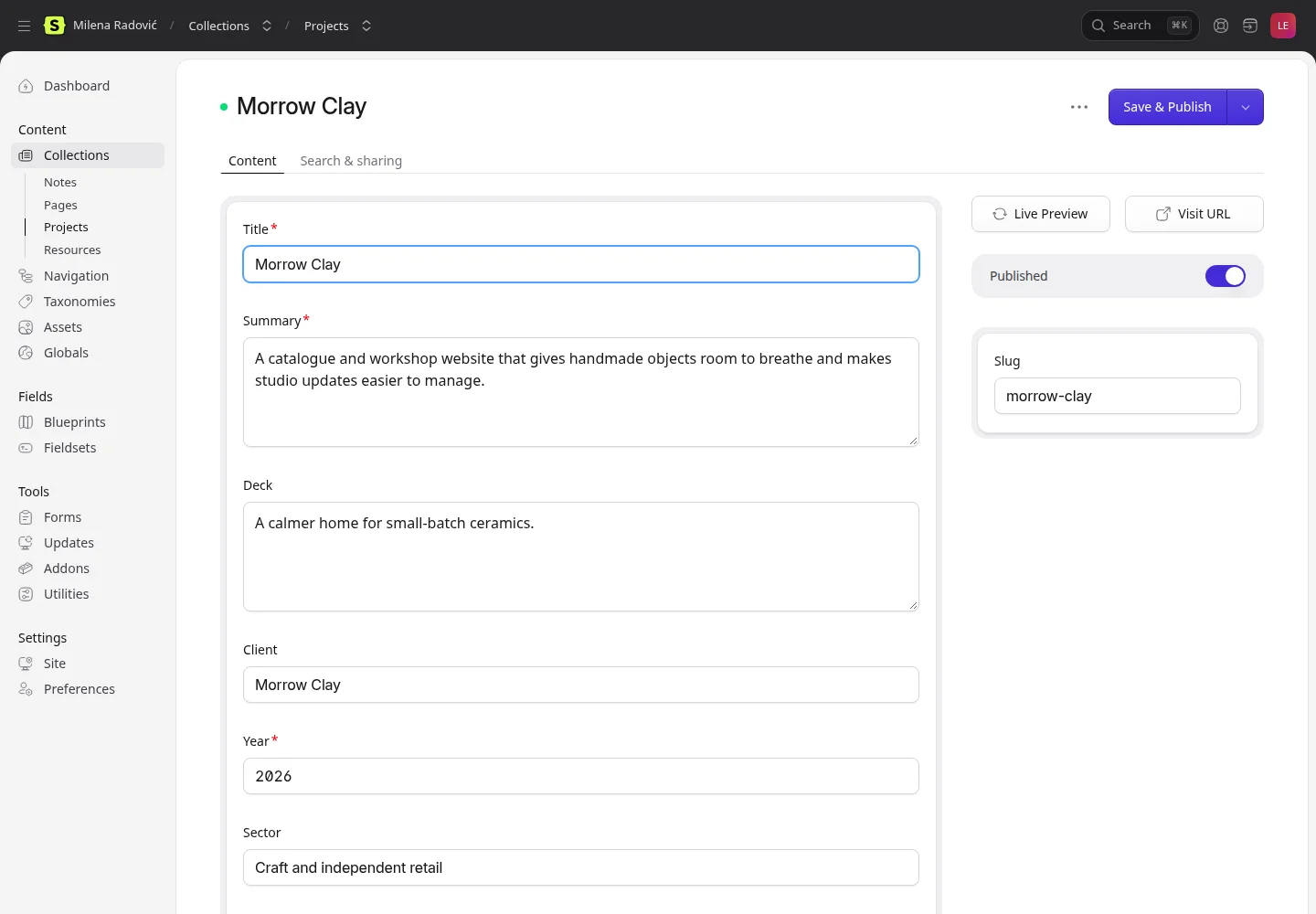
01 — Edit a project
A project has a name, a summary, a year, a cover image, and a longer story. Those pieces have their own fields because they do different jobs.
Change the summary and it can appear wherever that project is listed. Choose a new cover and the same image record can supply the archive and selected-work sections. The case study keeps its own room for detail.
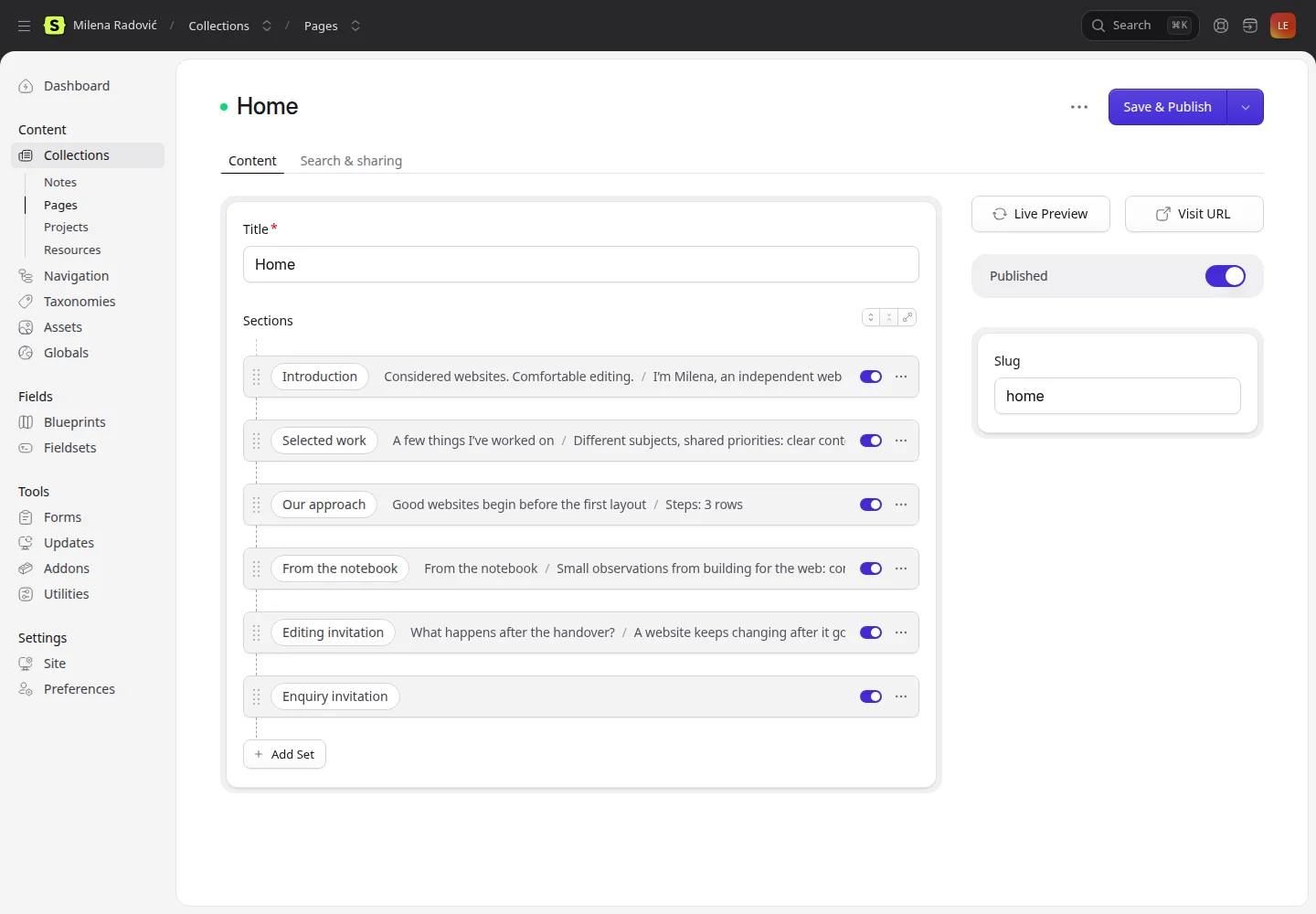
02 — Compose a page
The homepage is assembled from a small set of sections: an introduction, selected work, an approach, recent notes, and an enquiry invitation.
Editors can choose the content and arrange the sections. The templates handle spacing, typography, and small-screen layouts. That keeps routine updates focused on what the page needs to say.
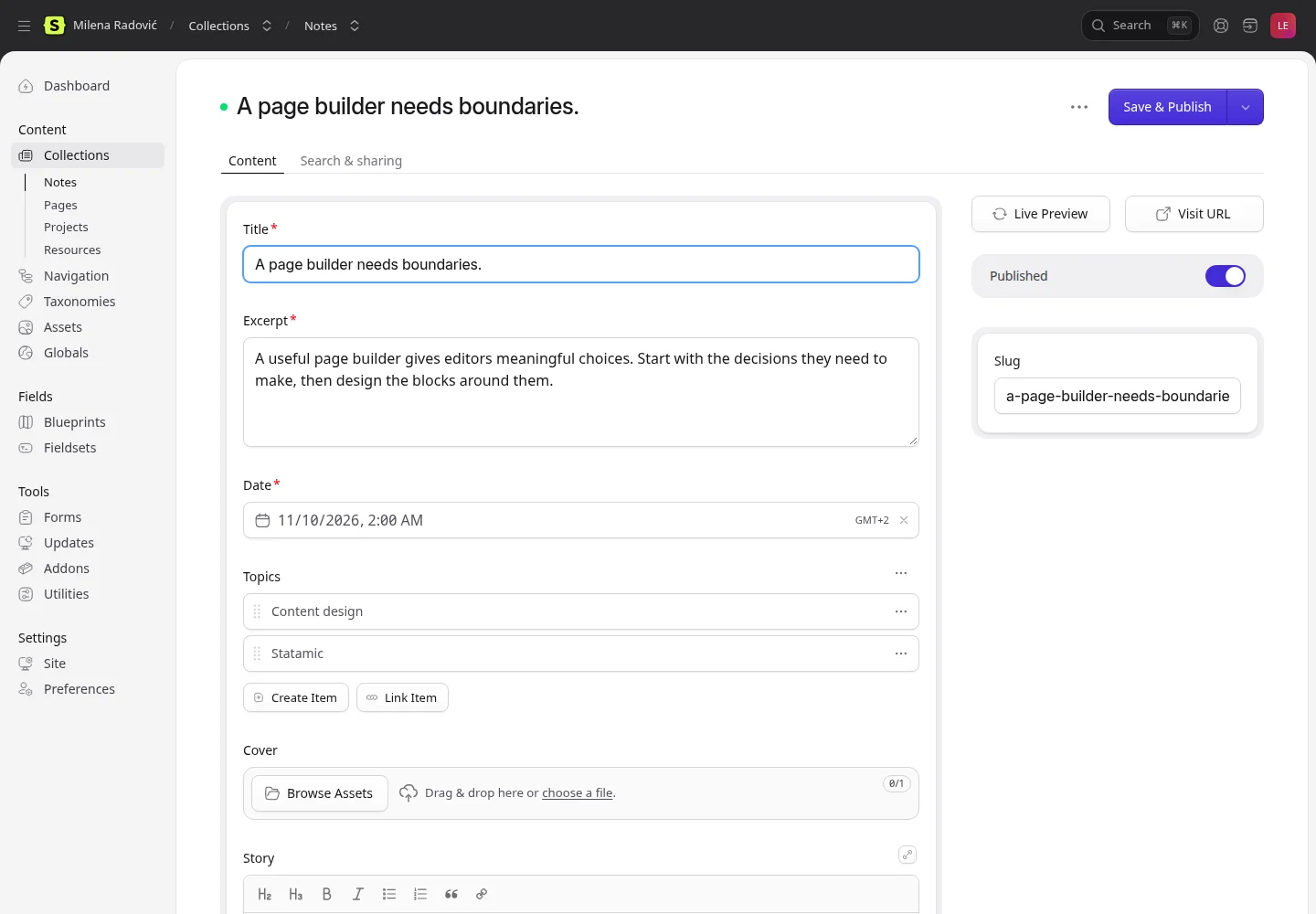
03 — Publish a note
A note begins with a title, excerpt, topics, and publication date. Its body supports text, captioned images, code examples, and related reading.
Preview the page to check its reading rhythm and image placement before publishing. Choosing related entries connects the new article to writing already on the site.
Connected content, fewer repeated updates
Projects, notes, and resources are separate collections. Topics connect related material. Navigation and shared site details have their own editing areas. Images carry their descriptions and credits with them.
The aim is simple: someone making a change should be able to find the right place for it and understand where it will appear.
Your editing experience should fit your work.
A studio catalogue, an events programme, and an editorial archive ask different things of their editors. The content structure should reflect those differences.
Inside this website
Three everyday editing tasks
A good place to start
Have a site that your team has outgrown?
Tell me what you need to change, what you want to keep, and who will be looking after the content. We can start there.
Tell me about your project